Isaac Myers and the shipyard Black Baltimore built
Fells Point, 1865. As the Civil War ended, Baltimore's shipyards became a fight over who would get the work. White caulkers and ship carpenters struck until the yards fired their Black coworkers. Within months, the men who had been pushed out raised the money, found a way around owners who would not deal with them, and opened a shipyard of their own.
The trade
Wooden ships leak. Caulkers kept them afloat by sealing the seams of the hull. In the shipyards of Fells Point before the Civil War, much of that work was done by Black men, free and enslaved, working side by side.10 Frederick Douglass learned the trade there while he was still enslaved.13 In 1838, Black caulkers formed the Caulkers Association, one of the first Black trade unions in the country, and used it to bargain for better pay.2,11
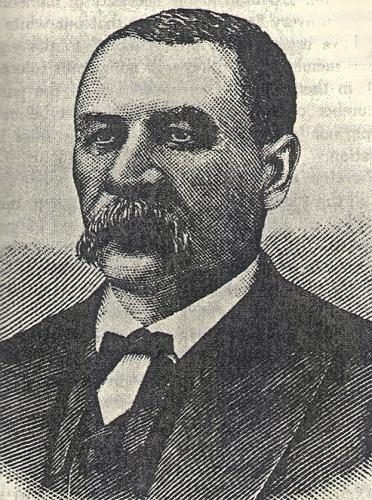
Isaac Myers was born free in Baltimore in 1835. Maryland would not educate Black children in its public schools, so he was taught at a private day school run by the Rev. John Fortie. At 16 he was apprenticed to a Black master caulker. By 20 he was supervising the caulking of clipper ships.4,6
Pushed out
The pay that Black caulkers had won made them a target. In the years before the war, white workers attacked them in the yards, and some owners stopped hiring them.2,10 In October 1865, as the war ended, white caulkers backed by ship carpenters went on strike and refused to return until the yards fired Black caulkers and longshoremen. City officials and police sided with the strikers. The yards gave in.11,4,14
Accounts of how many lost their work range from more than a hundred caulkers to more than a thousand dockworkers.11 Myers, who had spent the early 1860s in the grocery trade and returned to caulking, was among those shut out.6,4
The yard
Myers proposed an answer: if the yards would not hire Black workers, Black workers would own a yard. He, John W. Locks and about fifteen other men organized the effort, meeting at the hall of the Sharp Street church.1,7 They sold stock and raised $10,000 from Black residents of Baltimore and beyond.3,11 Frederick Douglass is reported to have been among the investors.9,3 They borrowed $30,000 more from a ship captain.11,14
The land came through a white businessman. William Applegarth negotiated the lease on a yard at Kennard's Wharf, at the foot of Philpot Street in Fells Point, and assigned it to them.1 On February 12, 1866, the company opened, first under the name of the John Smith Company. In 1868 it was chartered by the state as the Chesapeake Marine Railway and Dry Dock Company.1,6
Within months it employed about 300 Black caulkers, paying around $3 a day, and won government contracts. In time it hired white workers too.1,3,11
From the yard to the national stage
In 1868, Myers and his fellow workers organized the Colored Caulkers Trade Union Society and elected him president. The next year the National Labor Union invited Black delegates to its August 1869 convention in Philadelphia, and nine were recognized. Myers addressed the convention.6,8,2
"I speak today for the colored men of the whole country... when I tell you that all they ask for themselves is a fair chance."11
Isaac Myers, National Labor Union convention, 1869
The convention declared that it drew no color line. That December, 214 delegates met in Washington, D.C., and founded the Colored National Labor Union. They elected Myers its first president.5,8
The two federations split for good in 1870. At the National Labor Union's congress that August, white delegates pressed Black workers to leave the Republican Party for the new National Labor Reform Party. The resolution passed 60 to 5. All five Black delegates voted no and did not return. In January 1871, Frederick Douglass succeeded Myers as president of the Colored National Labor Union. Without allies in the wider labor movement, and hit by the depression of 1873, it faded within a few years.8,5,11
The end of the yard
The shipyard outlasted both federations. It closed in 1884, when its lease on the waterfront expired and was not renewed. The Maryland State Archives records the cause as a misunderstanding.1
In the 1870s, Myers worked as a special agent for the Post Office Department. After running a coal yard in Baltimore, he was appointed a federal customs gauger in 1882. He organized the Maryland Colored State Industrial Fair Association, the Colored Business Men's Association of Baltimore and a building and loan association. He died in Baltimore on January 26, 1891, at 56. The Baltimore Sun reported that the crowd at his funeral was so large a path had to be opened through it.6,4
- 1835Isaac Myers is born free in Baltimore.
- 1838Black caulkers form the Caulkers Association.
- Oct. 1865White caulkers and ship carpenters strike until the yards fire Black workers.
- Feb. 12, 1866The Black-owned yard opens at Kennard's Wharf.
- 1868Chartered as the Chesapeake Marine Railway and Dry Dock Company. The Colored Caulkers Trade Union Society forms.
- Aug. 1869Myers addresses the National Labor Union in Philadelphia.
- Dec. 1869The Colored National Labor Union is founded, with Myers as president.
- Jan. 1871Frederick Douglass succeeds Myers.
- 1884The lease ends and the yard closes.
- 1891Myers dies in Baltimore.

Why this story, now
Black capital, labor and leadership built the yard. It still took a white agent's signature to get the land, and when the lease ended, so did the yard. Eighteen years of work, wages and contracts rested on a lease. At Dock we think about that every time we come to the water: who owns the waterfront shapes who gets to use it.
Shut out, these men did two things at once. They built their own institutions: a company, a union, a federation. They also kept asking to be let into the larger ones. Myers stood before the largest labor body in the country and asked for a fair chance. That request is still being made.
Black workers remain a strong presence in organized labor. In 2025, Black workers in the United States were more likely to belong to a union than white, Asian or Hispanic workers: 11.4 percent, against 9.9 percent of white workers, according to the Bureau of Labor Statistics. (Its 2025 figures average eleven months, because October data were not collected during the federal shutdown.)12
The site of the yard is now the Frederick Douglass–Isaac Myers Maritime Park, at 1417 Thames Street, run by the Living Classrooms Foundation.7,3 Anyone can stand on the water where they worked.
The water brings people together. It has also been used to keep people apart. We tell both, because both happened here.
Where the accounts differ
We checked this story against archival, scholarly, encyclopedic and labor-movement sources. Where they disagree, here is what we found and what we wrote.
- How many lost their jobs in 1865. One labor history puts it at more than 100 men; others say about 1,000 or more than 1,000 dockworkers, and a park curator described hundreds fired in a single day. The counts may describe different groups, caulkers alone or all dockworkers. We give the range.
- Whether Myers himself was fired. Some accounts say he lost his job in the strike. Others say he had left caulking for the grocery trade around 1860. One reference work reconciles the two: he returned to caulking in 1865. We follow that account.
- When the yard began. It opened in February 1866 and was chartered under its final name in 1868, which is why some sources give 1868.
- Bought or leased. Several accounts say the workers bought a shipyard. The Maryland State Archives shows the land was leased through William Applegarth, and the yard closed when the lease ran out. They owned the business. The waterfront stayed someone else's.
- Who the strikers were. Some retellings, and a museum curator quoted in 2006, describe Irish and German workers refusing to work beside Black caulkers after the war. The scholarly and archival accounts of the 1865 strike itself say only white caulkers and ship carpenters, so we say that. In the 1850s, at least one account ties attacks on Black caulkers to a gang aligned with the nativist Know-Nothings, whose gangs were also attacking Irish and German immigrants in those years.
- Who founded it. Some labor histories describe "Black and white businessmen." The archives and other sources name Black founders and investors, with Applegarth acting as their agent. We describe it that way.
- Who organized it, and where. One history names five laymen of Bethel A.M.E. Church: Myers, John W. Locks, George Hackett, William F. Taylor and Causemen Gaines. The Living Classrooms Foundation says Myers and about fifteen others met at the Sharp Street church's hall, and other accounts say the investors came from two nearby churches. Only Myers and Locks are named in the state archives, so we name those two.
- Frederick Douglass as an investor. Press coverage of the park and some histories say he bought stock. We have not found it in a scholarly source, so we say he is reported to have been an investor.
- Which came first, the union or the yard. One account dates the Colored Caulkers Trade Union Society to 1866. Most date it to 1868, after the yard opened. We use 1868.
- How the National Labor Union responded in 1869. Some accounts say it rejected Black workers outright. Others note it recognized nine Black delegates and passed a resolution against a color line, while leaving exclusion in place locally. We give both parts.
- When Douglass took over. Sources give January 1871 or 1872. We use January 1871, the date of the federation's second annual convention.
- The words of Myers's 1869 speech. The line we quote appears in several labor histories. Longer versions circulate online that we could not match to the convention record, so we quote only the part that is consistently reported.
- Why the yard closed. The state archives cite the lease. Another history points to changes in shipbuilding and the labor market. Both are recorded here.
Sources
Each number in the text links to the source here that supports it.
- Maryland State Archives, "The Chesapeake Marine Railway and Dry Dock Company," Black Baltimore 1870–1920
- Baltimore Heritage, "1831–1884: Abolition and Emancipation," Baltimore's Civil Rights Heritage, citing Bettye C. Thomas, "A Nineteenth Century Black Operated Shipyard, 1866–1884," Journal of Negro History (1974), and Frank Towers, "Job Busting at Baltimore Shipyards," Journal of Southern History (2000)
- Explore Baltimore Heritage, "Frederick Douglass–Isaac Myers Maritime Park"
- Camille Heung, "Myers, Isaac (1835–1891)," BlackPast
- "Colored National Labor Union," Dictionary of American History, via Encyclopedia.com
- "Isaac Myers" and "Chesapeake Marine Railway and Dry Dock Company," Wikipedia, for the founding investors and Myers's later career
- Living Classrooms Foundation, Frederick Douglass–Isaac Myers Maritime Park
- "Colored National Labor Union," St. James Encyclopedia of Labor History, via Encyclopedia.com
- Associated Press, "Baltimore park recreates first black shipyard," via NBC News (2006)
- Baltimore Sun, "Preservationists are trying to save Fells Point homes that belonged to Black caulkers" (2021)
- AFL-CIO, "Black History Month Labor Profiles: Isaac Myers" (2019) and "Pathway to Progress" (2021); American Postal Workers Union, "Isaac Myers: Pioneer of the African-American Trade Union Movement"; The Association of Union Constructors, "Isaac Myers: A Labor Leader Who Built Opportunity" (2025). These are labor organizations and write from that point of view; we used them for details confirmed elsewhere.
- U.S. Bureau of Labor Statistics, "Union Members, 2025" (February 18, 2026)
- Frederick Douglass, Narrative of the Life of Frederick Douglass (1845), chapter 10
- "Myers, Isaac," via Encyclopedia.com